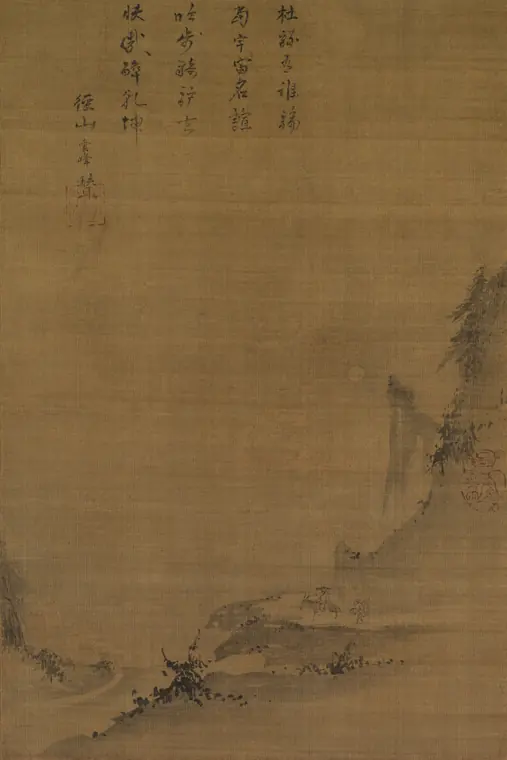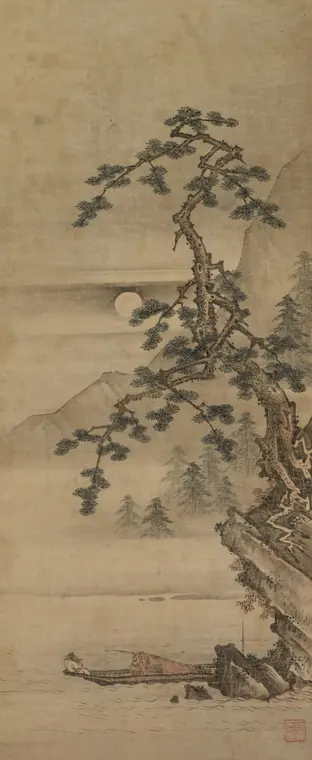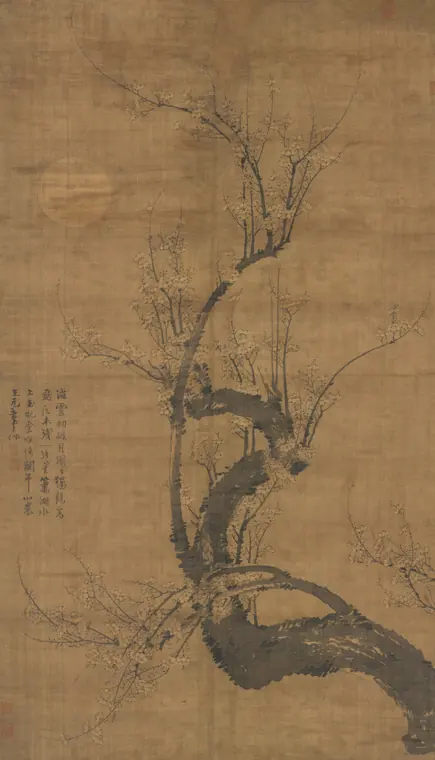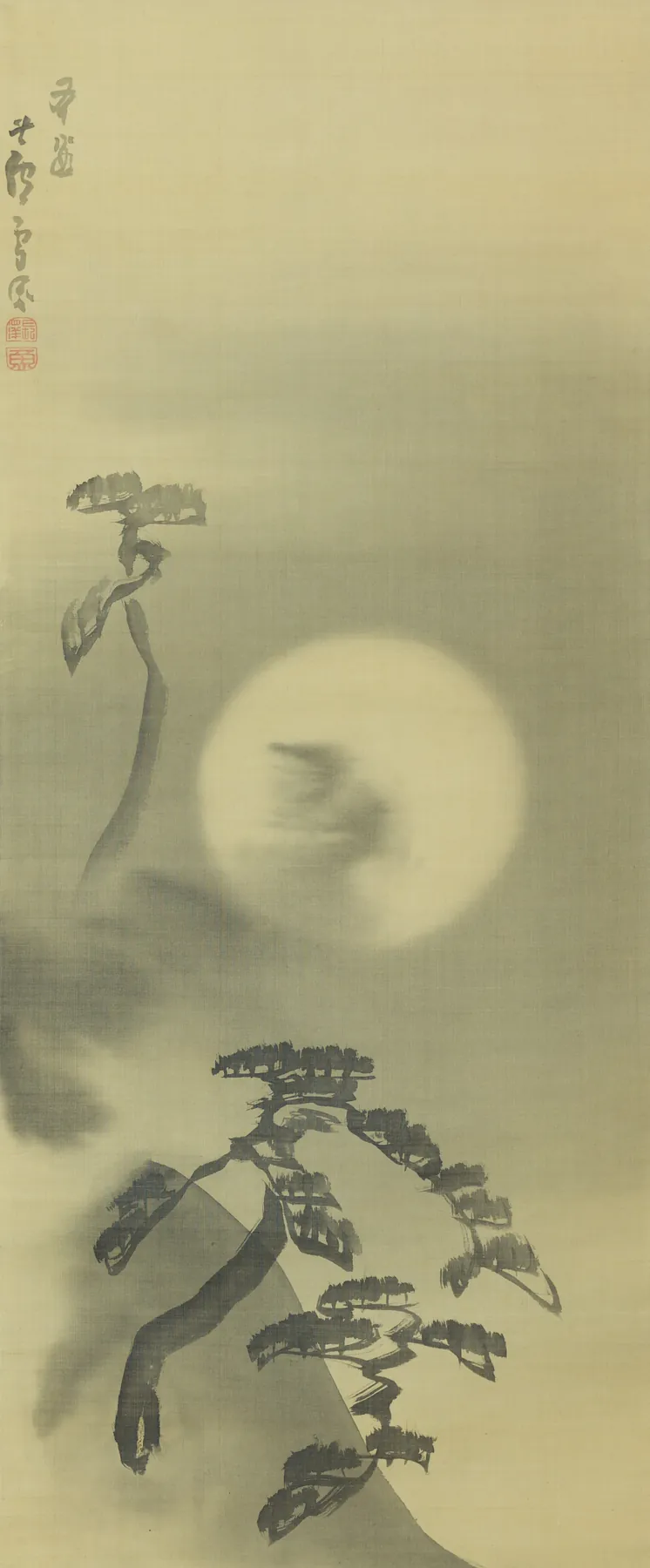
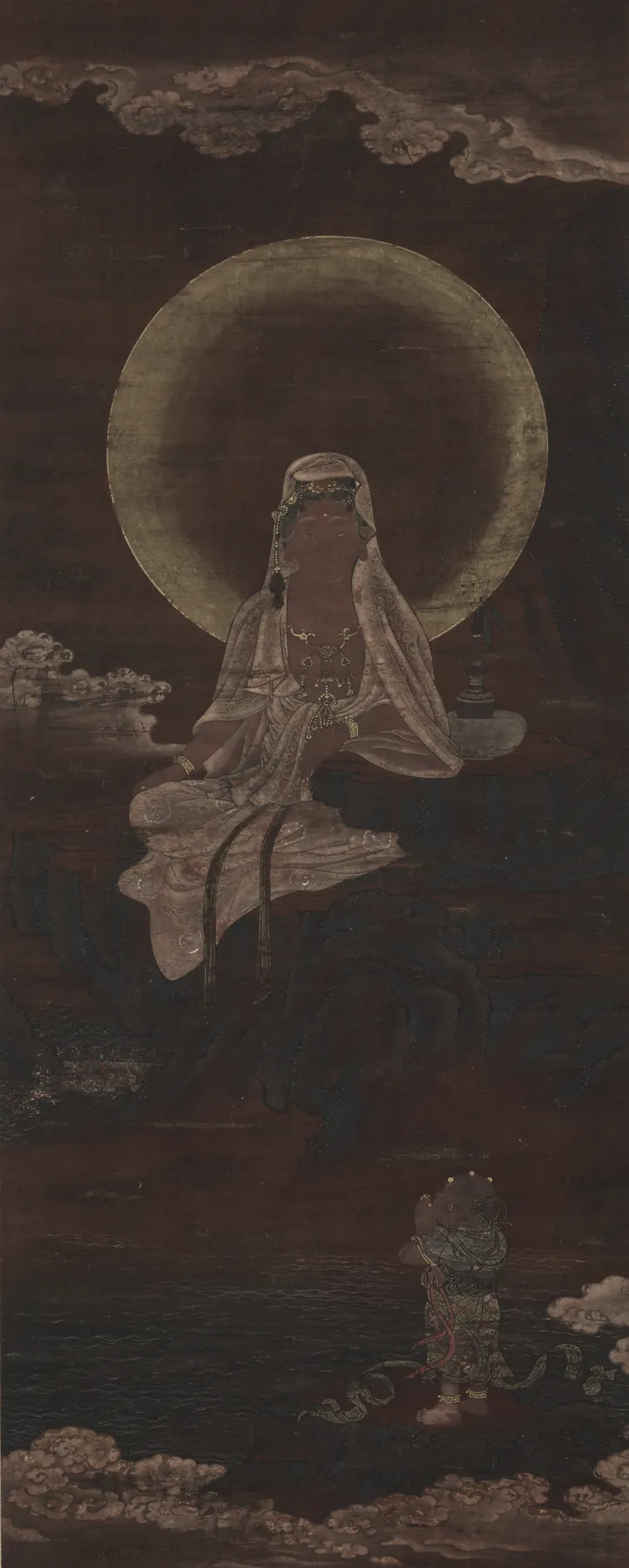
Water-Moon Kannon (Suigetsu Kannon). Japan, Meiji period (1868–1912), 1868–1912.

ज़ेन लोक

ZEN

Zen from China and Japan — kōans, silent sitting, ink paintings, and the old pond.

Water-Moon Kannon (Suigetsu Kannon), Japan, Meiji period (1868–1912), 1868–1912.

Descend

The verses

Matsuo Bashō · 1686

古池や蛙飛びこむ水の音

furu ike ya
kawazu tobikomu
mizu no oto

The old pond, aye! and the sound of a frog leaping into the water.

सरल अर्थ: पुराना तालाब। मेंढक कूदा। पानी की आवाज़।

In plain words: An old pond, a frog leaping in, and the sound of water.

Source

Root text: Matsuo Bashō's hokku of 1686. English: Basil Hall Chamberlain, “Bashō and the Japanese Poetical Epigram,” Transactions of the Asiatic Society of Japan, vol. XXX, part 2 (Tokyo, 1902), p. 279. Read Chamberlain's essay ↗
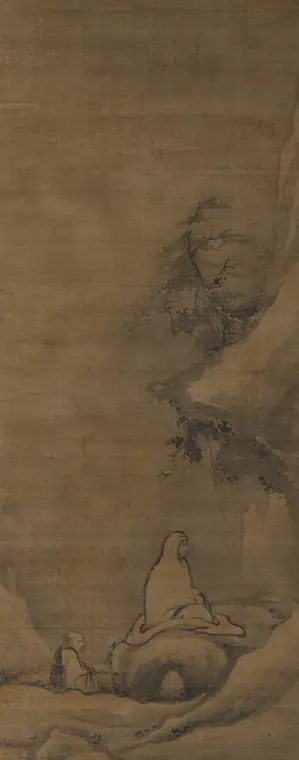
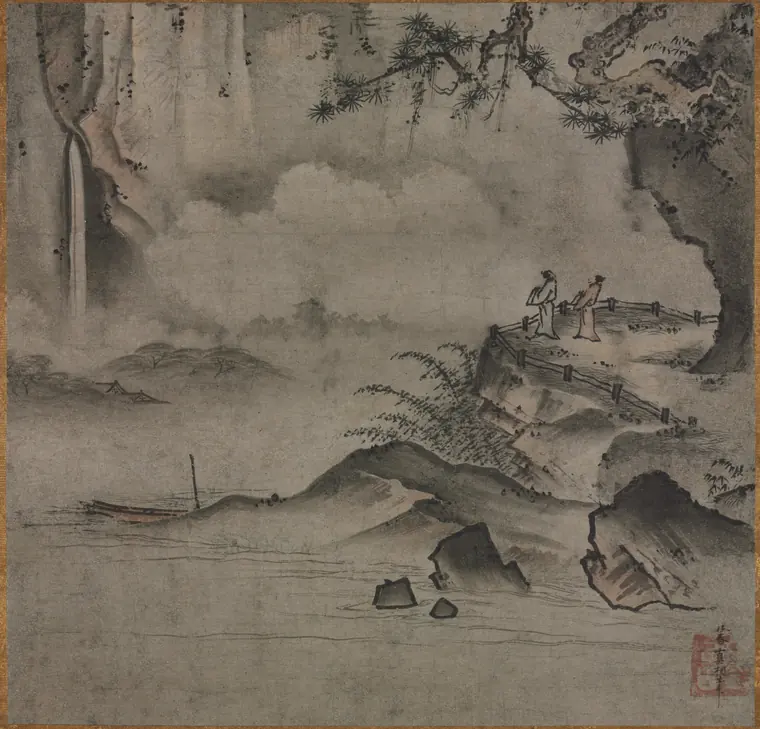
Root textTransliterationTranslation · 1902
1 of 5

The doors

Five doors, each to one teaching — not open yet. Read the verses or sit in silence below.

Sitting

Moonlit Landscape. Nagasawa Rosetsu 長澤蘆雪, 1794–95.
Moonlit Landscape, 1794–95

Nothing to add. The painting, the bell, and the time you choose.

The six worlds
  1. शिव लोकShiva Lok
  2. कृष्ण लोकKrishna Lok
  3. भक्ति लोकDevotion Lok
  4. बुद्ध लोकBuddha Lok
  5. ज़ेन लोकZen Lok
  6. कृष्णमूर्ति लोकKrishnamurti Lok
  7. यात्राThe Universal Walk
Look closer