प्रत्यभिज्ञा

Kashmir Śaivism

Who is the knower — and why can you never catch it?

Between the ninth and fourteenth centuries in Kashmir, a quiet lineage called the path Pratyabhijñā — recognition. You do not build a new sky; you notice what has been holding every cloud all along.

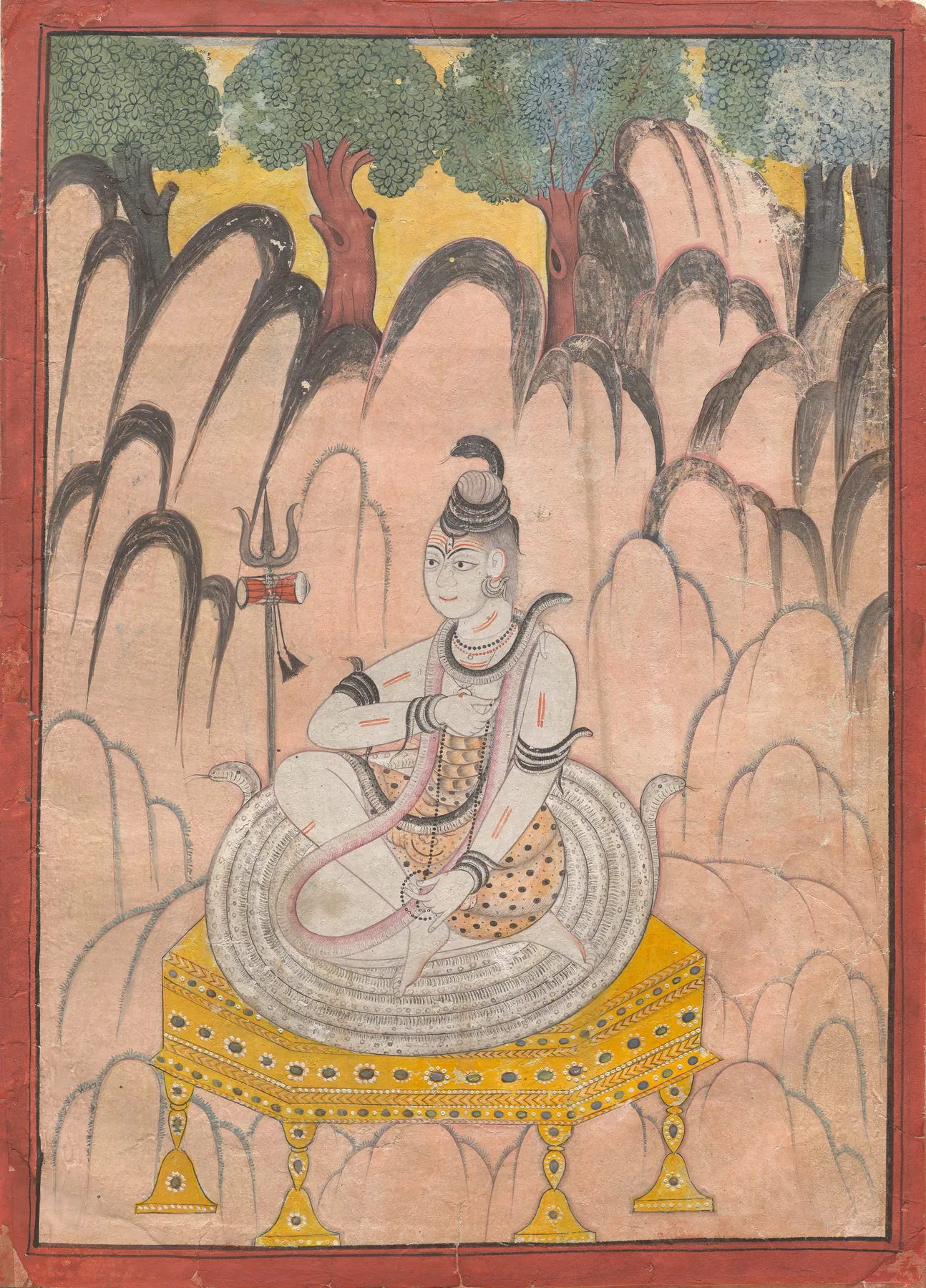
Shiva Seated on a Throne in a Landscape. Northern India, Pahari kingdoms, c. 1755.
Shiva Seated on a Throne in a Landscape, c. 1755

Three Sutras

Śiva Sūtras · 1.1

caitanyam ātmā

Living Mystics gloss from the Sanskrit

चैतन्यमात्मा

“Consciousness is the Self.”

Two words undo the whole search. You are not a small mind hoping one day to acquire awareness; what is reading this line is already it.

Vasugupta, Śiva Sūtras 1.1, in Kṣemarāja’s Śiva Sūtra Vimarśinī, Kashmir Series of Texts and Studies Vol. I (Srinagar, 1911). 1911 edition ↗

Śiva Sūtras · 1.2

jñānaṃ bandhaḥ

Living Mystics gloss from the Sanskrit

ज्ञानं बन्धः

“Limited knowledge is bondage.”

Not ignorance of books — taking one small slice of memory, name and habit and mistaking that fragment for the whole.

Vasugupta, Śiva Sūtras 1.2, KSTS Vol. I (Srinagar, 1911). 1911 edition ↗

Śiva Sūtras · 1.5

udyamo bhairavaḥ

Living Mystics gloss from the Sanskrit

उद्यमो भैरवः

“The sudden upward surge of attentiveness is Bhairava.”

Not a slow staircase built over years: the instant attention gathers without a split, before thought divides the moment into me and that.

Vasugupta, Śiva Sūtras 1.5, KSTS Vol. I (Srinagar, 1911). 1911 edition ↗

Three Masters

Vasugupta

9th century CE · Kashmir

Seventy-seven aphorisms that turned the seeker back toward the one looking.

Living in the Harwan valley beneath Mount Mahādeva, Vasugupta gave Kashmir Śaivism its opening key: awareness is not an object waiting at the end of a long road. It is the ground from which the first step is already taken.

Śiva Sūtras, KSTS Vol. I (Srinagar, 1911) · Edition ↗

Abhinavagupta

c. 950–1016 CE · Kashmir

The polymath who refused to separate beauty, feeling and awakening.

In his Tantrāloka and Tantrasāra, Abhinavagupta drew music, drama, poetry and Tantra into one vision of wholeness (pūrṇatā). Where ascetic schools withdrew from the senses, he saw every sight, note and tremor of feeling as consciousness tasting itself.

Kashmir Trika lineage · Tantrāloka & Tantrasāra (editorial summary)

Lallā (Lal Dĕd)

c. 1320–1392 CE · Kashmir

The wandering poet who carried Trika out of Sanskrit and into the street.

Leaving an unhappy household to walk the valley unguarded, she spoke Kashmiri recognition in the plain tongue of boatmen and potters: stop punishing the body, turn from the outside to the innermost, and stay as you are.

Sir George Grierson & Lionel D. Barnett, Lallā-Vākyāni (Royal Asiatic Society, 1920) · Edition ↗

The six worlds
  1. शिव लोकShiva Lok
  2. कृष्ण लोकKrishna Lok
  3. भक्ति लोकDevotion Lok
  4. बुद्ध लोकBuddha Lok
  5. ज़ेन लोकZen Lok
  6. कृष्णमूर्ति लोकKrishnamurti Lok
  7. यात्राThe Universal Walk
Look closer