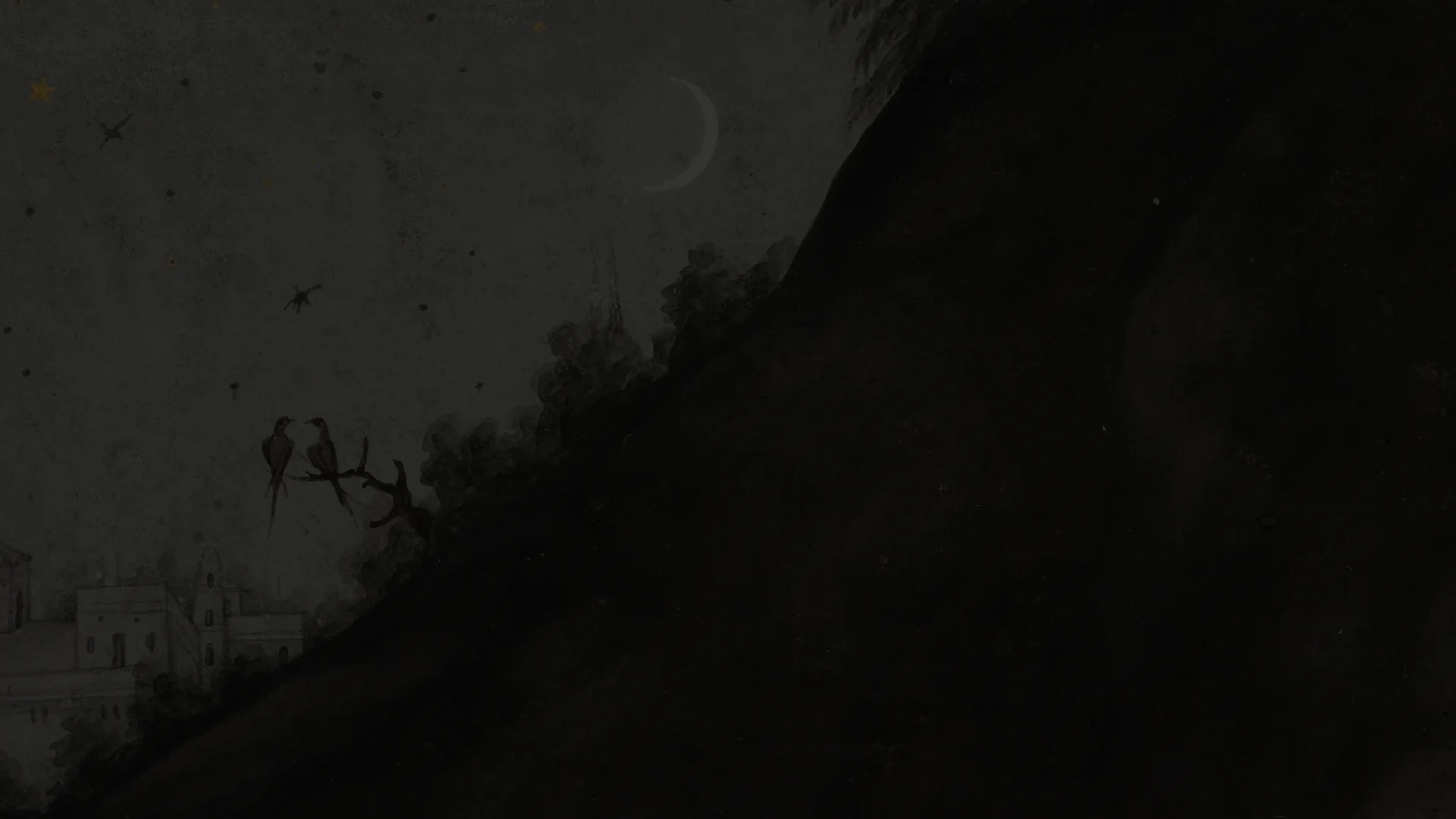
Beneath a banyan tree on a mountain slope sits a young teacher facing south, the direction of time and death. Around him sit four ancient, gray-haired sages who have mastered every scripture and still carry an unquiet heart.
The young teacher holds his hand in the quiet circle of the cin-mudrā and speaks not a single word. In that silence, every doubt of the old scholars falls away.
The thinking mind grows old collecting answers; awareness is always young, and only silence cuts the root of questioning.
ज्योतिर्लिङ्ग
Jyotirliṅga · The Pillar Without End
Śiva Purāṇa · Vidyēśvara Saṃhitā
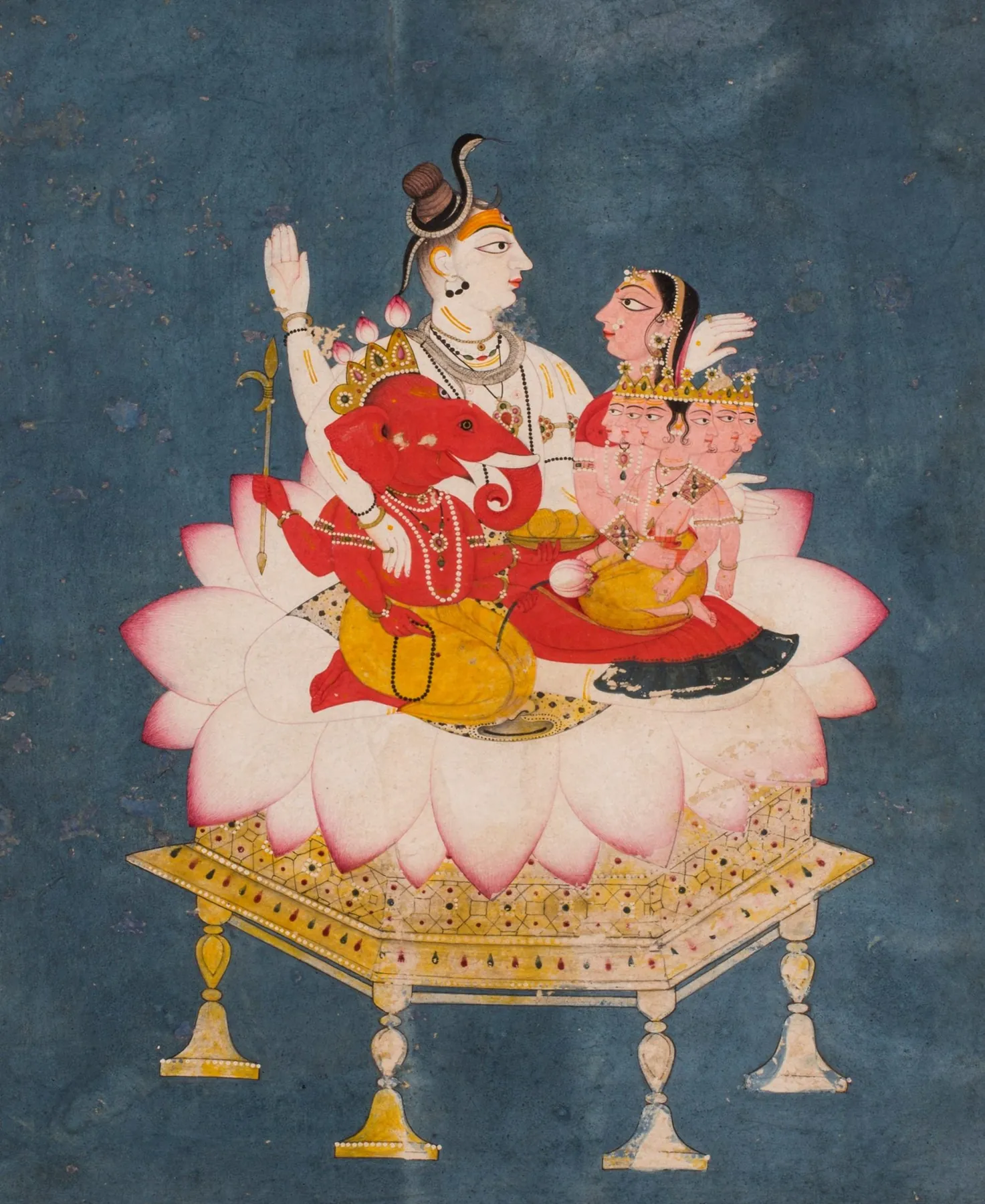
Shiva and His Family on Mount Kailash, c. 1800–10
Brahmā and Viṣṇu argued over which of them was supreme. Between them rose an immeasurable column of fire piercing above the skies and below the earth. As a white swan, Brahmā flew upward for ages to find its crown; as a boar, Viṣṇu dug downward to find its root. Neither found an end.
Viṣṇu returned honestly and admitted he could not fathom it. Brahmā caught a falling Ketakī flower and claimed he had seen the top — until Shiva stepped out of the light, revealed not to the one who pretended to know, but to the one who stopped pretending.
The intellect climbs upward through concepts and digs downward through memory; truth opens when both stop and admit they do not know.
नीलकण्ठ
Nīlakaṇṭha · The Blue Throat
Śiva Purāṇa & Mahābhārata · Churning of the Ocean
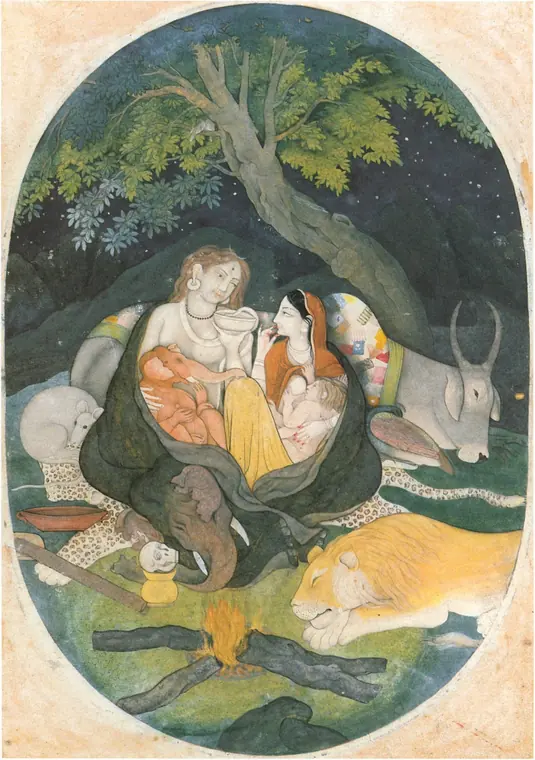
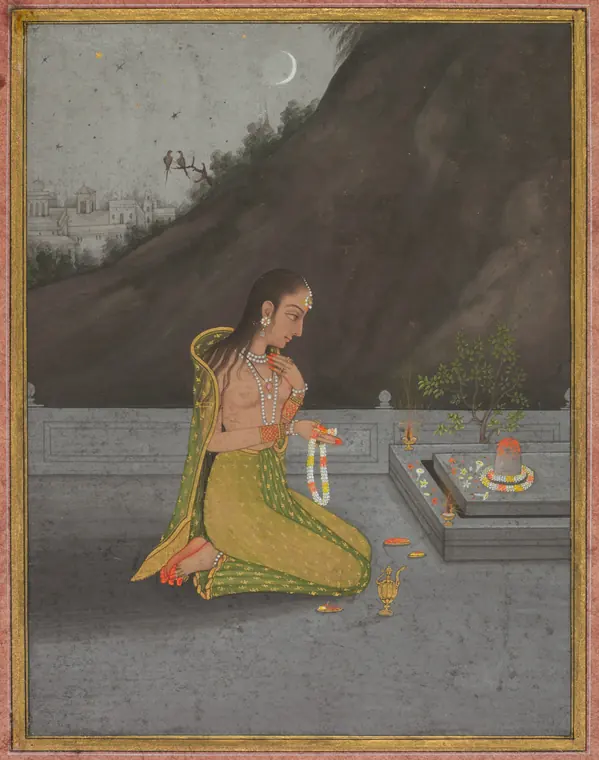
A Night Scene of Shiva Puja (recto), c. 1760–70
When gods and demons churned the cosmic ocean seeking the nectar of immortality, what rose first was not nectar at all — it was Hālāhala, a black poison fierce enough to scorch all three worlds. Every deity turned and fled.
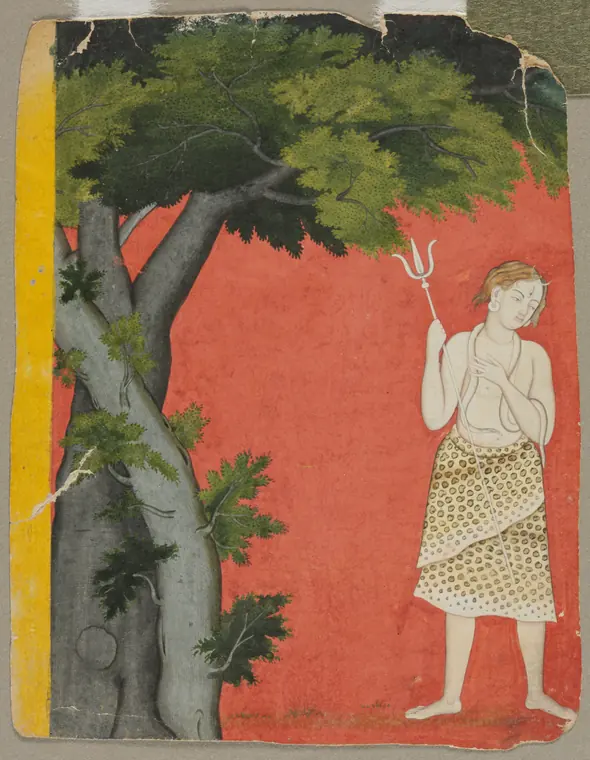
Shiva sat quietly, gathered the poison into his palm, drank it, and held it at his throat without swallowing it into his heart or spitting it back onto the world. His throat turned midnight blue, and the churning could go on.
When you sit still, what surfaces first is often old heat; neither fling it outward nor bury it in the heart — let open awareness hold it until it cools.